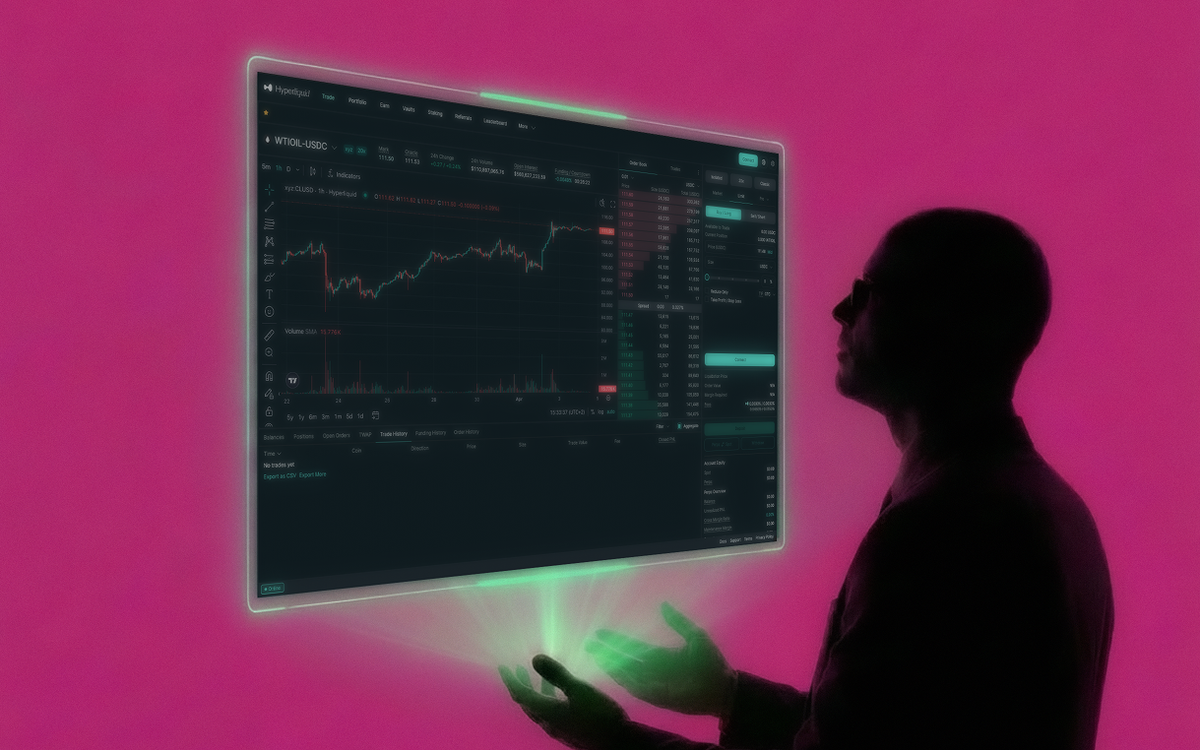
Spend a little time in crypto trading communities today and you will notice something interesting. During 2024, most traders were sharing their setups from exchanges like Binance or Bybit. However, many of those screenshots come from a different platform altogether: Hyperliquid.
This shift is not just another short lived trend. The trading volume, the caliber of traders using the platform, and the product itself all point in the same direction. Hyperliquid has quickly become one of the preferred venues for serious perpetual futures traders. If you are not paying attention to what is happening there, you may be overlooking where some of the most competitive trading activity in crypto now takes place.
To understand why, it helps to look at what Hyperliquid actually is, why it has grown so quickly, and why platforms like Mirrorly now make it possible to copy trade top performers there.
What Hyperliquid Actually Is#
Hyperliquid is a decentralized perpetual futures exchange that runs on its own Layer 1 blockchain. The platform launched publicly in 2023 and has rapidly grown into one of the highest volume derivatives venues in crypto. In many ways it competes directly with centralized exchanges such as Binance Futures, Bybit, and OKX. The key difference is that everything on Hyperliquid happens on chain.
The main product is perpetual futures trading. These are leveraged positions on crypto assets that have no expiration date. Perpetual futures are the instrument responsible for a large portion of global crypto trading volume.
Where Hyperliquid stands out is how it delivers this product. Many decentralized exchanges struggle to balance decentralization with performance. Staying fully on chain often means slower execution and thinner liquidity. Hyperliquid was built specifically to address those weaknesses. The result is a platform that feels as fast as a centralized exchange while still settling trades on chain.
Why Traders Are Moving to Hyperliquid#
Speed that actually works for active trading#
Execution speed is one of the first things traders notice. Hyperliquid processes orders in under one second. Most decentralized exchanges operate on block times that range from two to fifteen seconds. That delay makes active trading extremely difficult.
Hyperliquid’s custom blockchain was designed specifically to support high-throughput order books. This allows the platform to handle the kind of trading activity that professional or high frequency traders generate.
In perpetual futures markets, latency matters. Slower execution leads to worse fills, more slippage, and fewer opportunities to adjust positions quickly when market conditions shift.
You keep custody of your funds#
On centralized exchanges like Binance or Bybit, your assets sit in an exchange wallet. In practice, that means trusting the platform to safeguard your funds.
Hyperliquid works differently. You connect your own wallet and maintain control of your assets at all times, even while trading.
This distinction became far more important after several centralized exchange failures in recent years. Traders who stored funds on those platforms sometimes lost everything. With Hyperliquid, the custody risk is fundamentally different because the assets remain in the user’s control.
Every trade is transparent#
Another major difference is transparency. On Hyperliquid, every trade, position, and liquidation is visible on chain in real time.
Centralized exchanges operate more like black boxes. Traders see the order book, but the underlying activity is not publicly verifiable.
For traders who want to confirm market behavior or analyze other traders’ strategies, on chain transparency is a powerful advantage. It also enables a more reliable form of copy trading, since performance data can be independently verified rather than taken at face value.
No identity verification required#
Hyperliquid does not require identity verification to start trading. Users simply connect a crypto wallet and begin.
For many traders around the world, this removes a major barrier. Some cannot access centralized exchanges due to regional restrictions. Others prefer not to go through lengthy KYC procedures.
A higher concentration of experienced traders#
One less obvious factor is the type of traders the platform attracts. Because Hyperliquid requires wallet based interaction and an understanding of on chain systems, it naturally draws a more technically experienced user base.
The result is a trading environment that tends to include more advanced participants. On Mirrorly’s curated trader list, many Hyperliquid traders consistently produce strong risk adjusted returns. The platform’s structure naturally filters for a certain level of sophistication.
How Hyperliquid Differs From Binance Futures#
Both platforms offer leveraged perpetual futures trading, but the underlying structure is quite different.
With Binance Futures, the exchange holds your funds and manages the trading infrastructure centrally. Execution is fast, but transparency is limited and users must rely on the platform’s custody.
Hyperliquid flips that model. Traders keep custody of their assets through their own wallets. Trades settle on-chain, and all activity is publicly visible. Execution speeds remain competitive thanks to the platform’s custom blockchain design.
Binance still maintains advantages in certain areas, particularly the number of available markets and liquidity on the largest trading pairs. However, for traders who prioritize transparency, self-custody, and decentralized infrastructure, Hyperliquid has become an increasingly attractive alternative.
Why Hyperliquid Makes Copy Trading More Powerful#
Copy trading has long existed on centralized exchanges, but it comes with a major compromise. To copy a trader, you usually need to deposit funds directly into the exchange. In other words, you are trusting both the trader and the platform with your capital.
Hyperliquid changes that dynamic.
Because all trading activity is visible on-chain, Mirrorly can track trades in real time and mirror them directly from a user’s own wallet. The system replicates the trader’s actions without requiring users to give up custody of their assets.
This approach creates a form of copy trading that is transparent, verifiable, and non-custodial. Instead of handing funds to an intermediary, users simply mirror the trading decisions of experienced traders while keeping control of their capital.
Mirrorly’s curated list already includes several of the strongest performing Hyperliquid traders. Their track records are publicly visible and independently verifiable through on chain data.
Is Hyperliquid the Right Platform for You?#
Hyperliquid tends to appeal most to traders who actively trade perpetual futures or want exposure to strategies built around them. It also suits those who prefer maintaining custody of their own funds and are comfortable connecting and managing crypto wallets.
The platform may feel less familiar for complete beginners or traders who primarily want access to a wide range of spot markets. Some users also prefer the simplicity of a fully managed centralized exchange.
The Bottom Line#
Hyperliquid represents a shift in how perpetual futures trading infrastructure can work. It combines the speed traders expect from centralized exchanges with the transparency and custody advantages of decentralized systems.
The migration of experienced traders toward the platform reflects that shift. On chain activity, performance data, and the growing ecosystem around Hyperliquid all suggest that it is becoming an important venue for serious crypto traders.
For those interested in following top performers while maintaining control of their funds, Hyperliquid and tools like Mirrorly offer a model of copy trading that aligns much more closely with the original ideals of decentralized finance.